
DPF cleaning machine vs manual cleaning — which is better? Compare efficiency, cost, and cleaning performance to choose the right solution for your workshop.
Diesel Particulate Filters (DPF) play a critical role in reducing emissions and maintaining engine performance. Over time, DPF systems become clogged and require proper cleaning.
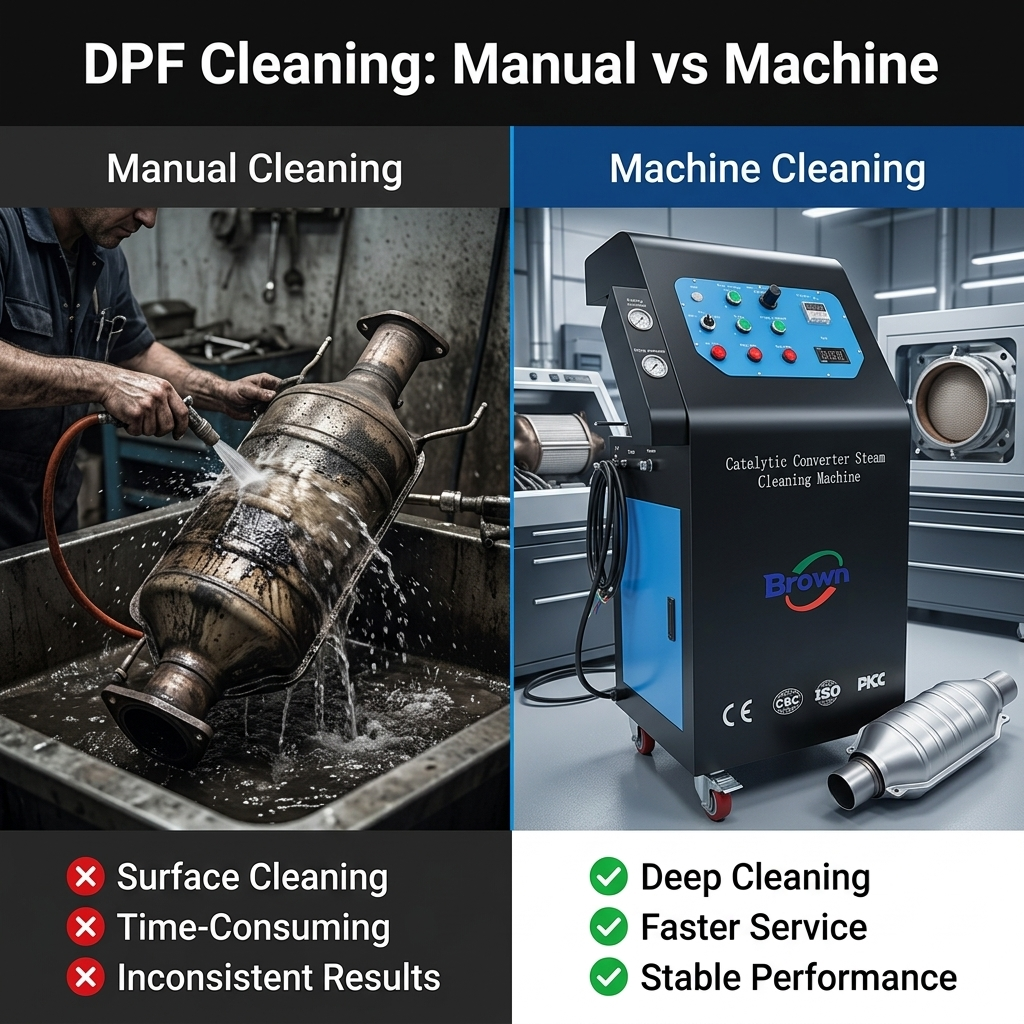
Many workshops still use manual cleaning methods — but are they enough?
🔧 Manual Cleaning: Basic but Limited
Manual cleaning usually involves:
- Chemical soaking
- Water flushing
Advantages:
✔ Lower upfront cost
✔ Easy to perform
Limitations:
❌ Cannot fully clean internal channels
❌ Time-consuming
❌ Results vary by operator
⚙️ DPF Cleaning Machine: A Professional Solution
A DPF cleaning machine uses controlled pressure, temperature, and flow to deliver deeper and more consistent cleaning.
Key Benefits:
✔ Deep internal cleaning
✔ Stable and repeatable results
✔ Faster service time
✔ Reduced labor effort
⏱ Efficiency Comparison
Manual cleaning can take significantly longer and may require repeat work.
With a machine:
- Faster turnaround
- Higher daily service capacity
- Better customer satisfaction
💰 Cost Perspective
Although manual cleaning seems cheaper initially:
- More labor cost
- Lower efficiency
- Possible re-cleaning
A machine helps improve long-term profitability.
🚀 Conclusion
For modern workshops, a DPF cleaning machine offers a more efficient, consistent, and scalable solution compared to manual cleaning.
For distributors, it is also a valuable product category with growing demand in diesel service markets.