
Learn how to choose the right brake fluid exchanger for your workshop. Discover key features, benefits, and tips for distributors and garage owners.
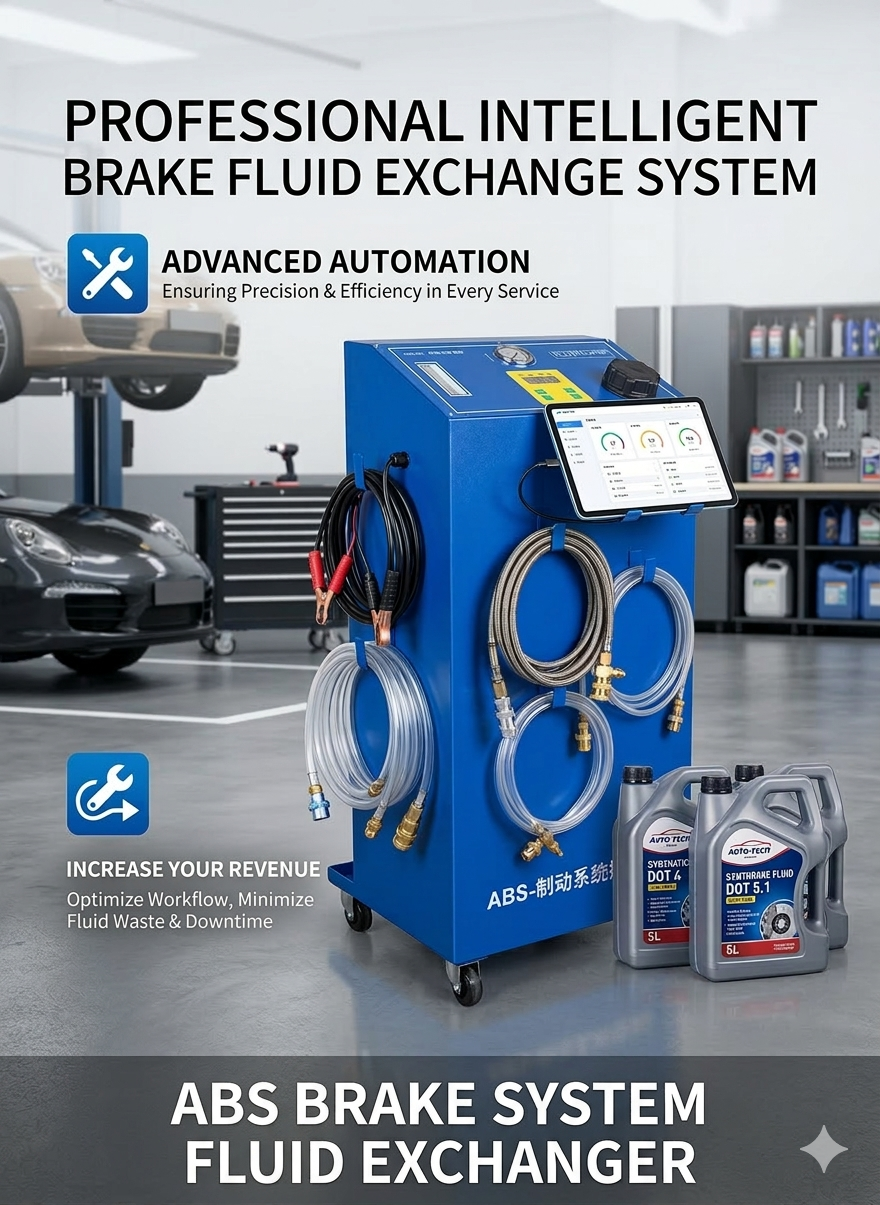
🔧 1. Stable Pressure Control Is Essential
A high-quality brake fluid exchanger should provide stable and adjustable pressure.
Why it matters:
- Prevents air from entering the brake system
- Ensures smooth fluid replacement
- Reduces risk of brake failure
⚙️ 2. Ease of Operation
Modern workshops prefer machines that are easy to use.
Look for:
- One-button operation
- Clear pressure display
- Quick connection design
This reduces training time and improves work efficiency.
🚗 3. Compatibility with Different Vehicles
Your machine should support:
- Multiple vehicle types
- Different brake system designs
This is especially important for workshops handling various car brands.
⏱ 4. Efficiency and Time Saving
A professional brake fluid exchanger can:
- Complete service faster
- Reduce labor cost
- Increase daily service capacity
For busy workshops, this directly impacts profitability.
🛠 5. Durability and Build Quality
Choose machines with:
- Corrosion-resistant components
- Stable pump system
- Reliable structure
A durable machine ensures long-term use and fewer maintenance issues.
💼 6. Supplier Support (Important for Distributors)
If you are a distributor or importer, consider:
- OEM / Private Label options
- Stable production capacity
- After-sales support
Working with a reliable manufacturer makes long-term cooperation easier.
🚀 Conclusion
Choosing the right brake fluid exchanger is not just about the machine itself — it’s about improving workshop efficiency and building a profitable business.
If you are looking for a reliable supplier, combining equipment + consumables can help you achieve long-term growth.